I bought Paul McCartney's "New" album and whew! it's a relief to say that it is good. I think wife #3 is a good influence. Gone is the lameness of the songs from "Chaos and Creation in the Backyard" and especially "Driving Rain". This album hits hard with strong, concise songs. The only weak point is still Paul's voice, but it is better here than on the standards album "Kisses on the Bottom". I think Paul should realize that he's 71 years old and that he really can't hit the high notes very well anymore. When he sings in a lower register, he's still sounds the same. On "Kisses" he sang most of the songs on a higher scale for some reason and came across sounding like Carol Channing. Here, with a couple of exceptions, he avoids the high voice ballads and sings the rockers with his good, lower voice.
Is it McCartney's best? No, but it is certainly one of his better albums and that's saying a lot from me who only listened to the album once. Sometimes, I hate a McCartney album until I've heard it four or five times. This one is good right away. That means it should get even better with every listen.
Fun Ideas Productions -- Multi-Media Print & Video. Mark D. Arnold, Writer, Artist, Sales, Video Production
Tuesday, October 15, 2013
Saturday, September 28, 2013
Happy 50th Birthday, Tennessee Tuxedo!
Happy 50th Birthday to Tennessee Tuxedo. The first episode of "Tennessee Tuxedo and his Tales" called "Mixed-Up Mechanics" aired 50 years ago today on CBS!
Sunday, September 22, 2013
Well, Two out of Three Ain't Bad
There are things I look for and am very happy once I find them. Three are listed below. Two of them, The 1972 Sesame Street Calendar and King-Sized Cracked #4 I found very cheaply! The first was free; the second about $10 with shipping. The third is still illusive to me. If you have one, please let me know. It is the Ringo Starr Vertical Man Best Buy Bonus Disc. I have the songs, but I would like the original CD of this. Please contact me at funideas.mark@gmail.com if you have one for sale or trade.
Jack Davis in Sick
Prior to returning to Mad in 1965, Jack Davis made the rounds at other humor magazines, having tenures at Trump, Humbug, Cracked, Panic and finally Sick before returning to the fold. I recently scanned some images from various issues of Sick circa 1962-1964 for Hank Harrison and I present them to you now since they are kind of rare in comparison to Davis' work elsewhere.
The first is from Sick 16 and is the rejected cover artwork from the same issue.
Next is from Sick 19's back cover.
Next is Sick 26 utilizing artwork from a Davis Christmas card.
Finally, Sick 42 with another Christmas card.
Thursday, September 05, 2013
Frozen in Ice Interview by Didier Ghez
Didier Ghez is a Disney fan and historian and interviewed me recently about my upcoming book about Disney called "Frozen in Ice". His Disney History blog is at http://disneybooks.blogspot.com/
This upcoming book intrigued me and I decided to send its author a few questions.
Didier Ghez: When and why did you decide to write this book?
Mark Arnold: I had the idea for quite awhile because of my frustrations with Leonard Maltin's "The Disney Films" and where it concluded. He kept updating his book, but gave little coverage to anything post-Walt, only going into late 1967. I discovered that there were many other projects that Walt was involved with that were released in 1968 and many even later than that. Also, many projects that Walt had nothing to do with were and are still worthy of the name Disney.
I was born in 1966 on the exact same day and year that Walt Disney died. The Disney of the 1970s and 1980s are what I grew up with. Walt Disney was just a founder, and I didn't identify with what he was doing, except when they reissued older films. I identified with what was currently going on, and I enjoyed most of it, but today this period is dismissed as being bad and unwatchable. Not true.
It was after my two-volume book "If You're Cracked, You're Happy: The History of Cracked Mazagine" that I was searching for another book to write and started writing "Frozen in Ice" even before I had a publishing agreement figuring I would get one in time, and I did.
DG: Could you describe the kind of research you conducted in order to write it?
MA: Of course, the Maltin book, plus many other books released over the years as well as viewing all 75+ films that were released during the period covered in the book. I also read my back issues of "Disney News" and read other books and saw videos containing interviews with the stars of the films as well as obtaining facts from various online sources such as IMDB. I also visited the Walt Disney Family Museum to see if they had any more information.
DG: Did you spend time interviewing some of the people who worked at the Studio and at WED at the time?
MA: I was initially going to do formal interviews like I did with my other books, but found that there were so many interviews and commentaries in existence, most of that work was already done for me. I have met many Disney stars over the years and many times they repeated the same stories I read or heard in other interviews. I didn't think that the living stars would shed any new light on what they've already said elsewhere by me interviewing them again. To most Disney stars, it was a job and as such they have limited memories about working there. Also, many of the stars of the period have now passed away as Disney tended to hire aging actors who couldn't get work elsewhere. It wasn't considered glamorous to be working on a Disney movie to many stars at that time.
The stars that I have met and talked about Disney with include Dick Van Patten, Tim Conway, Don Pedro Colley, Cloris Leachman, Harvey Korman, Ernest Borgnine and Jon Provost.
The only interview I really wanted to get was with Ron Miller. I did contact him through the Museum and through his winery, but my requests fell on deaf ears. I get the impression that he didn't want to relive the years that he was in charge very much, since the general opinion is that he helped ruin the studio, which isn't true.
DG: What are the main chapters of the book?
MA: Mainly it is set up like the Maltin book, but with one difference. I have a chapter covering each year. For instance, I'll cover 1968 and talk about everything that happened to Disney in that year including TV, comic books, records, theme parks, etc. and even include what didn't get released. Then I cover in detail as Maltin did, each film that came out that year. So, still using 1968 as an example, that includes "Blackbeard's Ghost", "The One and Only, Genuine, Original Family Band", "Never a Dull Moment", "The Horse in the Grey Flannel Suit" and "The Love Bug". For each film I write a detailed synopsis and then write a short review and include comments by the stars or interesting details about the production. Then, I start over again with 1969, going all the way up to 1985.
The reason I stopped at 1985 is that Disney as a company really changed from what it was once Michael Eisner took over in 1984. It was already in flux, but Eisner really dramatically changed it to the direction it is today and laid off the majority of any connections to the past. At this point, there's no going back. Disney is just too big. It is hard to believe there was a time where Disney wasn't doing too well and almost got bought out. I discuss all of this in detail.
DG: What are the key discoveries Disney historians and scholars can expect if they pick up this book?
MA: That the years 1966-1985 weren't as bad as people remember for Disney. They did some memorable stuff like "The Love Bug", "Bedknobs and Broomsticks" and "Freaky Friday" and even "Tron". Sure, they had some doggy films, but they did also when Walt was alive and certainly after Eisner took over. In fact, there's probably more of them since Disney releases so much more stuff nowadays.
The book is 550 pages and has photo images of movie posters, and is designed to be a thorough description of the history of the period from 1966-1985.
After I'm done, I will resume work on my book about DePatie-Freleng (Pink Panther).
This upcoming book intrigued me and I decided to send its author a few questions.
Didier Ghez: When and why did you decide to write this book?
Mark Arnold: I had the idea for quite awhile because of my frustrations with Leonard Maltin's "The Disney Films" and where it concluded. He kept updating his book, but gave little coverage to anything post-Walt, only going into late 1967. I discovered that there were many other projects that Walt was involved with that were released in 1968 and many even later than that. Also, many projects that Walt had nothing to do with were and are still worthy of the name Disney.
I was born in 1966 on the exact same day and year that Walt Disney died. The Disney of the 1970s and 1980s are what I grew up with. Walt Disney was just a founder, and I didn't identify with what he was doing, except when they reissued older films. I identified with what was currently going on, and I enjoyed most of it, but today this period is dismissed as being bad and unwatchable. Not true.
It was after my two-volume book "If You're Cracked, You're Happy: The History of Cracked Mazagine" that I was searching for another book to write and started writing "Frozen in Ice" even before I had a publishing agreement figuring I would get one in time, and I did.
DG: Could you describe the kind of research you conducted in order to write it?
MA: Of course, the Maltin book, plus many other books released over the years as well as viewing all 75+ films that were released during the period covered in the book. I also read my back issues of "Disney News" and read other books and saw videos containing interviews with the stars of the films as well as obtaining facts from various online sources such as IMDB. I also visited the Walt Disney Family Museum to see if they had any more information.
DG: Did you spend time interviewing some of the people who worked at the Studio and at WED at the time?
MA: I was initially going to do formal interviews like I did with my other books, but found that there were so many interviews and commentaries in existence, most of that work was already done for me. I have met many Disney stars over the years and many times they repeated the same stories I read or heard in other interviews. I didn't think that the living stars would shed any new light on what they've already said elsewhere by me interviewing them again. To most Disney stars, it was a job and as such they have limited memories about working there. Also, many of the stars of the period have now passed away as Disney tended to hire aging actors who couldn't get work elsewhere. It wasn't considered glamorous to be working on a Disney movie to many stars at that time.
The stars that I have met and talked about Disney with include Dick Van Patten, Tim Conway, Don Pedro Colley, Cloris Leachman, Harvey Korman, Ernest Borgnine and Jon Provost.
The only interview I really wanted to get was with Ron Miller. I did contact him through the Museum and through his winery, but my requests fell on deaf ears. I get the impression that he didn't want to relive the years that he was in charge very much, since the general opinion is that he helped ruin the studio, which isn't true.
DG: What are the main chapters of the book?
MA: Mainly it is set up like the Maltin book, but with one difference. I have a chapter covering each year. For instance, I'll cover 1968 and talk about everything that happened to Disney in that year including TV, comic books, records, theme parks, etc. and even include what didn't get released. Then I cover in detail as Maltin did, each film that came out that year. So, still using 1968 as an example, that includes "Blackbeard's Ghost", "The One and Only, Genuine, Original Family Band", "Never a Dull Moment", "The Horse in the Grey Flannel Suit" and "The Love Bug". For each film I write a detailed synopsis and then write a short review and include comments by the stars or interesting details about the production. Then, I start over again with 1969, going all the way up to 1985.
The reason I stopped at 1985 is that Disney as a company really changed from what it was once Michael Eisner took over in 1984. It was already in flux, but Eisner really dramatically changed it to the direction it is today and laid off the majority of any connections to the past. At this point, there's no going back. Disney is just too big. It is hard to believe there was a time where Disney wasn't doing too well and almost got bought out. I discuss all of this in detail.
DG: What are the key discoveries Disney historians and scholars can expect if they pick up this book?
MA: That the years 1966-1985 weren't as bad as people remember for Disney. They did some memorable stuff like "The Love Bug", "Bedknobs and Broomsticks" and "Freaky Friday" and even "Tron". Sure, they had some doggy films, but they did also when Walt was alive and certainly after Eisner took over. In fact, there's probably more of them since Disney releases so much more stuff nowadays.
The book is 550 pages and has photo images of movie posters, and is designed to be a thorough description of the history of the period from 1966-1985.
After I'm done, I will resume work on my book about DePatie-Freleng (Pink Panther).
Saturday, August 03, 2013
I Get It! I Get It!
My friend Lee and I are always commenting on the fact that sometimes you see or hear something over and over and don't really get the "in joke" or reference until many weeks, months or even years later. For example, the newest Baskin-Robbins Ice Cream logo. I had looked it at dozens of times while driving by it before I saw that there was a "31" within the "BR". Very clever!
Also, many people don't know the puns of certain comic strip names, like "Andy Capp". This was a UK comic strip that ran in the US about a man who liked to frequent the pubs and was always drunk. It wasn't until later that I realized the pun of "handicap" for the strip's name. Ha ha ha! Again, very clever.
Here's an example that has taken me 30 years to realize. Some have figured it out much sooner than I after doing a cursory look in the Internet. In 1983, Paul McCartney released an album entitled "Pipes of Peace". On it, there's a song called "The Other Me". At the time, most US reviewers massacred the song's lyrics citing the line "and I acted like a dustbin lid" as a very poor example of lyric writing. I now realize that this was Cockney rhyming slang.
Granted, I live in the US and although a pretty good anglophile, I did not hear of Cockney rhyming slang until the third Austin Powers movie called "Goldmember" where Michael Caine, in portraying Austin's father, explained what Cockney rhyming slang was.
Today, I was watching "The Fall and Rise of Reginald Perrin", a great UK comedy from 1976 that I've seen many times before, but never really "watched" it. I have purchased a number of DVD sets of various TV shows that I've liked over the years and now make it a point to really watch every episode and pay attention to them. I'm sure I saw the third episode of this series before, but never really paid attention what Reggie's grown son was saying.
In the episode, he spouts off some Cockney rhyming slang and says "dustbin lid". He explains that he meant "kid", referring to his sister's children in the episode. Ironically, way back when "The Other Me" came out, my friend Ed said that "and I acted like a little kid" would have been a much better line than "dustbin lid".
I always assumed that McCartney meant dustbin lid as being kind of "open and shut" like a dustbin lid. Obviously now, this is not the case. He was using Cockney rhyming slang and was meaning "little kid".
That is the frustrating thing about McCartney sometimes for us Yanks. He is so immersed in being English or British that he puts lyrics like that throughout his songs. Lennon and the rest really abandoned that practice, mainly because Lennon and Starr moved to the US and even Harrison spent an appreciable amount of time here (in Hawaii) in his retirement years. McCartney does own homes here, but he really likes to remain quintessentially British, and it is reflected in his work with and without The Beatles. And of course, he's the only Beatle that's been knighted.
How about you? Is there something that you saw many, many times that you now have just "got"? Please let me know. I'd be curious to know what other people think.
Also, many people don't know the puns of certain comic strip names, like "Andy Capp". This was a UK comic strip that ran in the US about a man who liked to frequent the pubs and was always drunk. It wasn't until later that I realized the pun of "handicap" for the strip's name. Ha ha ha! Again, very clever.
Here's an example that has taken me 30 years to realize. Some have figured it out much sooner than I after doing a cursory look in the Internet. In 1983, Paul McCartney released an album entitled "Pipes of Peace". On it, there's a song called "The Other Me". At the time, most US reviewers massacred the song's lyrics citing the line "and I acted like a dustbin lid" as a very poor example of lyric writing. I now realize that this was Cockney rhyming slang.
Granted, I live in the US and although a pretty good anglophile, I did not hear of Cockney rhyming slang until the third Austin Powers movie called "Goldmember" where Michael Caine, in portraying Austin's father, explained what Cockney rhyming slang was.
Today, I was watching "The Fall and Rise of Reginald Perrin", a great UK comedy from 1976 that I've seen many times before, but never really "watched" it. I have purchased a number of DVD sets of various TV shows that I've liked over the years and now make it a point to really watch every episode and pay attention to them. I'm sure I saw the third episode of this series before, but never really paid attention what Reggie's grown son was saying.
In the episode, he spouts off some Cockney rhyming slang and says "dustbin lid". He explains that he meant "kid", referring to his sister's children in the episode. Ironically, way back when "The Other Me" came out, my friend Ed said that "and I acted like a little kid" would have been a much better line than "dustbin lid".
I always assumed that McCartney meant dustbin lid as being kind of "open and shut" like a dustbin lid. Obviously now, this is not the case. He was using Cockney rhyming slang and was meaning "little kid".
That is the frustrating thing about McCartney sometimes for us Yanks. He is so immersed in being English or British that he puts lyrics like that throughout his songs. Lennon and the rest really abandoned that practice, mainly because Lennon and Starr moved to the US and even Harrison spent an appreciable amount of time here (in Hawaii) in his retirement years. McCartney does own homes here, but he really likes to remain quintessentially British, and it is reflected in his work with and without The Beatles. And of course, he's the only Beatle that's been knighted.
How about you? Is there something that you saw many, many times that you now have just "got"? Please let me know. I'd be curious to know what other people think.
Tuesday, July 30, 2013
Monster Memories with Ray Bradbury
I got my first article published in Dennis Druktenis' great and long-running magazine called Scary Monsters. Once a year, he does a yearbook of new material inclusive of the Scary Monsters numbering called Monster Memories #86. My article is about my memories of meeting the late, great Ray Bradbury at Comic Con International over the years. If you have a chance to, pick it up at your local comic book store or Barnes & Noble if they still have it on sale. Scary Monsters #87 is already out, so this one may be gone. You can also try Amazon or Ebay. In any case, it's always a great magazine and you should get every issue. Currently, I'm working on an article for Dennis about the monster magazines published by Cracked. I'll announce it here, soon.
Monday, July 29, 2013
Rare Pink Panther and Misterjaw Puppets
Probably the rarest thing in my collection. So rare, it is no longer in my collection. Pink Panther and Misterjaw sponge puppets courtesy of Avon. I got these in 1976 and never used them and stored them well, but by 1994 they were literally rotting and deteriorating to dust. I grabbed my camera and took these farewell photos before I had to throw them away. I believe that there was also a bar of soap (long gone) and they came in a box, but I no longer have that, either. I really liked the Misterjaw one as his mouth opened and he had sponge teeth.
Saturday, July 27, 2013
Comic Creators Over 80 (3rd Revision)
Revision
3 – July 22, 2013
With
this revision, I added a little bio of what each person is best known. This is probably the last revision I will do for awhile.
I'm
trying to compile an updated list of anyone who's in the comic book and comic
strip business who is over 80 and still alive. I don't know if this is complete
and in some cases, I don't know if it's accurate. If you see someone who should
or shouldn't be on this list, please advise. Also, steer away from animation or
children's book artists and writers unless they also worked in comic books or
comic strips. Also, help with birth years would be great, too!
Brad Anderson – 1924 (Marmaduke)
Murphy
Anderson – 1926 (DC, Hawkman, Superman)
Dick
Ayers – 1924 (Marvel, Sgt. Fury)
Ken
Bald – 1920 (Dr. Kildare, Dark Shadows)
Sy Barry – 1928 (The Phantom)
Allen
Bellman – 1924 (Marvel, Timely)
Vivian S. Minanel Berg – 1923 (artist, wife of Dave Berg)
Frank Bolle – 1924
(Apartment 3-G, Juliet Jones)
Bob
Bolling – 1928 (Archie, Little Archie)
Leonard Brenner – 1932 (Mad)
John
Bulthuis – birth year? (Archie, Stanmor, Trojan)
Orlando Busino – 1926 (gag
cartoonist)
Dick Cavalli – 1923
(Winthrop, Morty Meekle)
Nick
Cardy – 1920 (DC, Aquaman, Teen Titans, Marvel)
Nat Champlin – 1919 (Fawcett, Street & Smith)
Jack
Chick – 1924 (Chick Tracks)
Paul Coker, Jr. – 1929 (Mad, Rankin/Bass)
Ernie Colon – 1931 (Harvey, Richie Rich, Marvel)
Anthony D'Adamo – birth year? (various magazines, Newsday)
Paul Coker, Jr. – 1929 (Mad, Rankin/Bass)
Ernie Colon – 1931 (Harvey, Richie Rich, Marvel)
Anthony D'Adamo – birth year? (various magazines, Newsday)
Jack
Davis – 1924 (EC, Mad, TV Guide, Time, RCA)
Gene Deitch – 1924 (Terrytoons, Tom Terrific, Terr’ble Thompson)
Jose
Delbo – 1933 (DC, Wonder Woman, Batman)
Jay Disbrow – 1926 (Iger Studios, Sheena, Aroo)
Roy
Doty – 1922 (Wordless Workshop, gag cartoonist)
Steve
Ditko – 1927 (Marvel, Spider-Man)
Mort Drucker – 1929 (Bob Hope, Mad)
Jerry Dumas – 1930 (Sam’s Strip)
Mort Drucker – 1929 (Bob Hope, Mad)
Jerry Dumas – 1930 (Sam’s Strip)
Hy
Eisman – 1927 (Bunny, Katzenjammer Kids, Popeye)
Marty Elkin – 1928 (Harwell, Marvel, Farrell)
Jules
Feiffer – 1929 (Feiffer, gag cartoonist)
Al Feldstein – 1925 (EC, Tales from the Crypt, Weird Science, Mad)
Bertram
Fitzgerald – 1932 (Golden Legacy, Fast Willie Jackson)
Hy
Fleishman – 1927 (Atlas, Marvel, Lev Gleason)
Frank
Fletcher – 1919 (Harvey)
Ramonda
Fradon – 1926 (Brenda Starr)
Fred Fredericks – 1929 (Mandrake)
Bob
Fujitani – 1920 (DC)
Paul Fung, Jr. – 1923
(Blondie)
Ted
Galindo – 1927 (Prize, Atlas, Marvel)
Joe
Giella – 1928 (DC, Green Lantern)
Frank Giusto – 1926 (Ace)
Sam Glanzman – 1924
(Charlton, Hercules)
Bob
Globerman – birth year? (Lev Gleason)
Stan
Goldberg – 1932 (Archie)
Sam Gross – 1933 (National Lampoon)
Stan Harfenist – birth year? (Harvey)
Sam Gross – 1933 (National Lampoon)
Stan Harfenist – birth year? (Harvey)
Irwin
Hasen – 1918 (Dondi)
Russ Heath – 1926 (Marvel, DC, EC)
Hugh Hefner – 1926 (Playboy, Trump)
Russ Heath – 1926 (Marvel, DC, EC)
Hugh Hefner – 1926 (Playboy, Trump)
Tom
Hickey – 1910 alive? (DC, Harvey, Lev Gleason)
Frank
Hill – 1929 (Dennis the Menace, Short Ribs)
Lee Holley – 1932 (Dennis the Menace, Ponytail)
Fran Hopper – 1922 (Fiction House)
Fred Iger – 1924 (American Comics Group)
Lee Holley – 1932 (Dennis the Menace, Ponytail)
Fran Hopper – 1922 (Fiction House)
Fred Iger – 1924 (American Comics Group)
Jim
Ivey – 1925 (Creepy, Monsters and Heroes)
Frank
Jacobs – 1929 (Mad)
Sid Jacobson – 1929 (Harvey, Star)
Al Jaffee – 1921 (Marvel, Mad, Humbug)
Harvey Janes – birth year?
Sid Jacobson – 1929 (Harvey, Star)
Al Jaffee – 1921 (Marvel, Mad, Humbug)
Harvey Janes – birth year?
Frank B. Johnson – 1931
(Boner’s Ark, Charlton)
Sydney Jordan – 1928 (Dick
Hercules, Jeff Hawke)
Jack
Katz – 1927 (The First Kingdom)
Mel Keefer – 1926 (DC, Strange Adventures)
Fred
Kida – 1920 (Airboy)
Everett Kinstler – 1926 (Atlas, Marvel, Dell)
Tom
Koch – 1925 (Mad, TV writer)
Ed Konick – birth year? (Charlton)
Mel
Lazarus – 1927 (Momma, Miss Peach)
Stan Lee (Stanley Martin Leiber) – 1922 (Timely, Atlas, Marvel)
Larry Lieber – 1931 (Marvel, Atlas, brother of Stan Lee)
Dick Locher – 1929 (Dick Tracy)
Stan Lee (Stanley Martin Leiber) – 1922 (Timely, Atlas, Marvel)
Larry Lieber – 1931 (Marvel, Atlas, brother of Stan Lee)
Dick Locher – 1929 (Dick Tracy)
Bob
Lubbers – 1922 (Fiction House, Secret Agent X-9)
George
Mandel – 1920 (gag cartoon writer)
Cal
Massey – 1927 (Cross, Superior, Timely, Atlas)
Shigeru Mizuki – 1922
(Manga, Anime)
Tom
Moore – 1928 (Archie)
Matt Murphy – 1923 (alive?)
(Harvey)
Jack O’Brien – 1922 (alive?)
(Harvey, Sad Sack, gag cartoonist)
George Olesen – 1924 (The
Phantom)
Don
Orehek – 1928 (Cracked, Playboy, gag cartoonist)
Jose Ortiz – 1932 (Warren, Vampirella)
Bill
Oughton – 1926
Mac
Pakula – birth year? (Atlas, Marvel)
Don Perlin – 1929 (Marvel,
Werewolf by Night, Defenders, Ghost Rider)
Jay Scott Pike – 1924
(Marvel, DC)
Paul
Peter Porges – 1927 (Mad)
Al Plastino – 1921 (DC, Superman, Nancy)
Quino (JoaquÃn Salvador Lavado) – 1932 (gag cartoonist, Mafalda)
Al Plastino – 1921 (DC, Superman, Nancy)
Quino (JoaquÃn Salvador Lavado) – 1932 (gag cartoonist, Mafalda)
Lily
Renee – 1925 (Fiction House)
Arnold Roth – 1929 (Humbug, Playboy, National Lampoon)
John Romita, Sr. – 1930 (Marvel)
Gaspar Saladino – 1926 (Marvel, DC, logo designer, letterer)
Arnold Roth – 1929 (Humbug, Playboy, National Lampoon)
John Romita, Sr. – 1930 (Marvel)
Gaspar Saladino – 1926 (Marvel, DC, logo designer, letterer)
Ken
Selig – 1924 (Harvey, Archie)
Joy
Seligsohn – 1927 (wife of Zeke)
Zeke
Seligsohn – birth year? (husband of Joy)
Marie
Severin – 1929 (EC, Marvel, sister of John Severin)
Larry Siegel – 1925 (Mad, TV writer)
Ed Silverman – 1924 (Hillman, Ziff-Davis)
Larry Siegel – 1925 (Mad, TV writer)
Ed Silverman – 1924 (Hillman, Ziff-Davis)
Joe
Sinnott – 1926 (Marvel, Fantastic Four)
Dan Spiegle – 1920 (Marvel, DC, Gold Key)
Leonard
Starr – 1925 (Little Orphan Annie, On Stage)
Tony
Tallarico – 1933 (Dell, Lobo, Cracked, Crazy)
Dexter
Taylor – birth year? (Little Archie)
Frank
Thorne – 1930 (Marvel, Red Sonja)
Angelo Torres – 1932 (EC, Mad)
Morrie Turner – 1923 (Wee Pals, Kid Power)
Albert Uderzo – 1927 (Asterix)
Angelo Torres – 1932 (EC, Mad)
Morrie Turner – 1923 (Wee Pals, Kid Power)
Albert Uderzo – 1927 (Asterix)
Mort
Walker – 1923 (Beetle Bailey, Hi and Lois)
James Warren – 1930 (Warren)
Morris Weiss – 1915 (Quality)James Warren – 1930 (Warren)
Gahan Wilson – 1930 (Playboy, National Lampoon)
Friday, July 26, 2013
Mick Jagger is 70!
Well, folks, today's the day, Mick Jagger is 70! And unlike people like Paul McCartney and John Lennon, he still has his voice and is still alive! I hope he lives another 30 years. Partner Keith Richards turns the big 7-0 in December if you can believe it, since he's looked about 100 for about 20 years...
Thursday, July 25, 2013
Today's Oddball Purchase
Seems strange to me that The Pink Panther would have an album of songs at all, much less a country music album, but here it is. It's a picture disc no less. Very strange. Haven't listened to it yet (yes, I still have a turntable). Stranger still is the back cover image showing The Pink Panther as an American Indian with full headdress dancing around The Inspector and Deux Deux tied to a post.
Songs include: Dixie, The Yellow Rose of Texas and of course, the ever-popular Panther Picker...
It came out in 1982.
Songs include: Dixie, The Yellow Rose of Texas and of course, the ever-popular Panther Picker...
It came out in 1982.
Wednesday, July 24, 2013
Alter Ego #120
"Alter Ego" #120 comes out next month. I saw a copy at Comic Con in San Diego. It also has an obituary by me, this one on Sid Couchey. It's kind of sad to write these things, but I'm honored to have been given the opportunity.
Alter Ego #119
Here's "Alter Ego" #119 featuring an obit for Paul Laikin written by me. This issue is chock full of good stuff as usual, but if you want to see another piece of my writing, check this issue out. On sale now!
Tuesday, July 23, 2013
Lou Scheimer Filmation Book Review
Years ago, Michael Swanigan and Darrell McNeil issued a book called "Animation by Filmation", which essentially was the first book covering the history of the Saturday morning TV production giant. That book was and still is indispensable. However, it is incomplete and contains many errors.
The advantage of Andy Mangels' "Lou Scheimer: Creating the Filmation Generation" is that it covers the entire story first hand and directly from the source. Although Lou was partnered with Norm Prescott for a number of years and with Hal Sutherland, it was Scheimer that was there during Filmation's remarkable 25+ year reign and beyond and is still with us today.
After I wrote my book, "Created and Produced by Total TeleVision productions: The Story of Underdog, Tennessee Tuxedo and the Rest", I was looking around for another project to work on. After dismissing Hanna-Barbera and Rankin-Bass as they had been covered very well, I looked into Filmation. I abandoned my idea once I discovered that Mangels had already begun the project, which was fraught with delays. I had heard about his book in 2011 and it was already behind schedule even then.
I forgot about Mangels' book and went on to other projects until earlier in 2013 when animation greats Scott Shaw! and Darrell McNeil told me of the availability of Mangels' book. McNeil even went on to recommend purchasing the book through TwoMorrows' (the publisher) website as it includes a full-color digital copy at no additional charge.
As far as the contents go, I learned quite a bit. Admittedly, Filmation was not my favorite cartoon studio growing up. I preferred H-B, R-B and DePatie-Freleng much more. In fact, I'm working on a DFE book now.
While recycling animation was done as a cost-saving measure at Filmation, as a viewer, it made everything they did come off as cheap to me, not just in cost, but quality as well.
Hindsight really displays Filmation's charms. I did have my favorites even then (Fat Albert, Archie, Star Trek) and respect even more now (Superman, Aquaman, Jerry Lewis, He-Man, etc.)
Mangels made the story told by Scheimer even more lush by filling out his memories of working on each of the shows with elaborate details and statistics and images to make this a must for any animation fan or scholar. It really puts the earlier Filmation book effort to shame (however, if you can find a copy of that earlier tome, it is still highly recommended for its multiple character model sheets and the fact that the book is virtually impossible to find.)
Mangels also gets Scheimer to speak at length about many projects that Filmation was considering over the years like a Marx Brothers animated series and why they didn't happen. He also discusses the largely forgotten Uncle Croc's Block show, which was also a personal favorite of mine, despite the fact that it was such a monumental flop for the ABC network that they refused to ever purchase a show ever again from Filmation as a result.
Great coverage is also presented of Scheimer's formative years as well as the successes and failures of Filmation and the ultimate end of the studio and what Scheimer has done since.
This is a must have book and I give it my highest recommendation.
Wednesday, July 17, 2013
Creators Over 80 - Revision 2 - July 17, 2013
Revision 2 – July 17, 2013
I'm trying to compile an updated list of anyone who's in the comic book and comic strip business who is over 80 and still alive. I don't know if this is complete and in some cases, I don't know if it's accurate. If you see someone who should or shouldn't be on this list, please advise. Also, steer away from animation or children's book artists and writers unless they also worked in comic books or comic strips. Also, help with birth years would be great, too!
Brad Anderson - 1924
Murphy Anderson - 1926
Dick Ayers - 1924
Ken Bald - 1920
Sy Barry - 1928
Allen Bellman -
1924
Vivian S. Minanel Berg - 1923
Frank Bolle - 1924
Bob Bolling - 1928
Leonard Brenner - birth year?
John Bulthuis - birth year?
Orlando Busino - 1926
Dick Cavalli - 1923
Nick Cardy - 1920
Nat Champlin - 1919
Hank Chapman -
alive?
Jack Chick - 1924
Paul Coker, Jr. - 1929
Ernie Colon - 1931
Anthony D'Adamo - birth year?
Jack Davis - 1924
Gene Deitch - 1924
Jose Delbo - 1933
Jay Disbrow - 1926
Roy Doty - 1922
Steve Ditko - 1927
Mort Drucker - 1929
Jerry Dumas - 1930
Hy Eisman - 1927
Marty Elkin - birth year?
Jules Feiffer -
1929
Al Feldstein - 1925
Hy Fleishman - birth year?
Frank Fletcher - 1919
Ramonda Fradon -
1926
Fred Fredericks - 1929
Bob Fujitani - 1920
Paul Fung, Jr. - 1923
Ted Galindo - 1927
Joe Giella - 1928
Frank Giusto - 1926
Sam Glanzman - 1924
Bob Globerman - birth year?
Stan Goldberg -
1932
Sam Gross - 1933
Stan Harfenist - birth year?
Irwin Hasen - 1918
Russ Heath - 1926
Hugh Hefner - 1926
Vern Henkel - 1917
Tom Hickey - 1910 (pretty sure he’s dead)
Frank Hill - 1929
Lee Holley - 1932
Fran Hopper - 1922
Fred Iger - 1924
Jim Ivey - 1925
Frank Jacobs -
1929
Sid Jacobson - 1929
Al Jaffee - 1921
Harvey Janes - birth year?
Frank B. Johnson - 1931
Sydney Jordan - 1928
Jack Katz - 1927
Mel Keefer - 1926
Fred Kida - 1920
Everett Kinstler - 1926
Tom Koch - 1925
Ed Konick - birth year?
Mel Lazarus - 1927
Stan Lee (Stanley Martin Leiber) - 1922
Len Leone - birth year?
Larry Lieber - 1931
Dick Locher - 1929
Bob Lubbers - 1922
George Mandel - 1920
Cal Massey - 1927
Shigeru Mizuki - 1922
Tom Moore - 1928
Matt Murphy – 1923 (alive?)
Jack O’Brien - 1922 (alive?)
George Olesen - 1924
Don Orehek - 1928
Jose Ortiz - 1932
Bill Oughton - birth year?
Mac Pakula - birth year?
Don Perlin - 1929
Jay Scott Pike - 1924
Paul Peter Porges
- 1927
Al Plastino - 1921
Quino - 1932
Lily Renee - 1925
Arnold Roth - 1929
John Romita, Sr. - 1930
Gaspar Saladino - 1926
Ken Selig - 1924
Joy Seligsohn - 1927
Zeke Seligsohn - birth year?
Marie Severin -
1929
Larry Siegel - 1925
Ed Silverman - birth year?
Joe Sinnott - 1926
Dan Spiegle - 1920
Leonard Starr - 1925
Tony Tallarico – 1933
Dexter Taylor - birth year?
Frank Thorne -
1930
Angelo Torres - 1932
Morrie Turner - 1923
Albert Uderzo - 1927
Mort Walker - 1923
James Warren - 1930
Morris Weiss -
1915!
Gahan Wilson - 1930
Ed Winiarski - ?
Tuesday, July 16, 2013
Comic Book and Comic Strip Creators Over 80
I'm trying to compile an updated list of anyone who's in the comic book and comic strip business who is over 80 and still alive. I don't know if this is complete and in some cases, I don't know if it's accurate. If you see someone who should or shouldn't be on this list, please advise. Also, steer away from animation or children's book artists and writers unless they also worked in comic books or comic strips. (?) = I don't know their living status.
Murphy Anderson - 1926
Dick Ayers - 1924
Ken Bald - 1920
Allen Bellman - 1924
Bob Bolling - 1928
Nick Cardy - 1920
Hank Chapman - ?
Jack Chick - 1924
Paul Coker - 1929
Ernie Colon - 1931
Jack Davis - 1924
Jose Delbo - 1933
Steve Ditko - 1927
Mort Drucker - 1929
Hy Eisman - 1927
Jules Feiffer - 1929
Ramonda Fradon - 1926
Al Feldstein - 1925
Joe Giella - 1928
Stan Goldberg - 1932
Sam Gross - 1933
Irwin Hasen - 1918
Russ Heath - 1926
Frank Hill
Lee Holley
Fran Hopper - 1922
Frank Jacobs - 1929
Sid Jacobson - 1929
Al Jaffee - 1921
Jack Katz - 1927
Fred Kida - 1920
Everett Kinstler - 1926
Tom Koch - 1925
Mel Lazarus - 1927
Stan Lee - 1922
Larry Lieber - 1931
Don Orehek - 1928
Paul Peter Porges - 1927
Al Plastino - 1921
Lily Renee - 1925
Arnold Roth - 1929
John Romita, Sr. - 1930
Marie Severin - 1929
Larry Siegel - 1925
Joe Sinnott - 1926
Tony Tallarico - 1933
Joe Torres - 1932
Morrie Turner - 1923
Mort Walker - 1923
Morris Weiss - 1915!
Gahan Wilson - 1930
Ed Winiarski - ?
Murphy Anderson - 1926
Dick Ayers - 1924
Ken Bald - 1920
Allen Bellman - 1924
Bob Bolling - 1928
Nick Cardy - 1920
Hank Chapman - ?
Jack Chick - 1924
Paul Coker - 1929
Ernie Colon - 1931
Jack Davis - 1924
Jose Delbo - 1933
Steve Ditko - 1927
Mort Drucker - 1929
Hy Eisman - 1927
Jules Feiffer - 1929
Ramonda Fradon - 1926
Al Feldstein - 1925
Joe Giella - 1928
Stan Goldberg - 1932
Sam Gross - 1933
Irwin Hasen - 1918
Russ Heath - 1926
Frank Hill
Lee Holley
Fran Hopper - 1922
Frank Jacobs - 1929
Sid Jacobson - 1929
Al Jaffee - 1921
Jack Katz - 1927
Fred Kida - 1920
Everett Kinstler - 1926
Tom Koch - 1925
Mel Lazarus - 1927
Stan Lee - 1922
Larry Lieber - 1931
Don Orehek - 1928
Paul Peter Porges - 1927
Al Plastino - 1921
Lily Renee - 1925
Arnold Roth - 1929
John Romita, Sr. - 1930
Marie Severin - 1929
Larry Siegel - 1925
Joe Sinnott - 1926
Tony Tallarico - 1933
Joe Torres - 1932
Morrie Turner - 1923
Mort Walker - 1923
Morris Weiss - 1915!
Gahan Wilson - 1930
Ed Winiarski - ?
Friday, March 08, 2013
Frank Hill, Lee Holley, Rich Koslowski, Greg Beda at Art Supplies Ink. Opening
My friend Greg Beda invited me to the Grand Opening of Rich Koslowski's new art store in Aptos, California called Art Supplies, Ink. Former Dennis the Menace artists Lee Holley and Frank Hill, who both have original art on display and for sale also attended. Here are some of the photos I took of the event last Saturday.
Tuesday, February 26, 2013
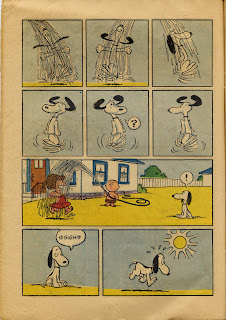
Schulz Peanuts Comic Book Art
Derrick Bang wrote a great article about Schulz's Peanuts comic book work. In the article, Bang says that Schulz only drew two complete comic book stories for Nancy #146 and Nancy #148 (both from 1957) before giving the chores to other artists. The full article is featured here: http://www.fivecentsplease.org/dpb/comicboo.html and the two four-page Peanuts stories appear below:

Pogens Again
I did a blog entry on Pogens awhile back and there was interest in the folder that they used to give away describing the cookies. I got this in Southern California around 1974 and Pogens were very popular then.
Wednesday, February 06, 2013
My Radio Show Recording Sessions
Here are some photos of me recording new segments last Saturday of "The Stories Behind the Stories" for "The Geek Speak Show". The podcast is now in its fourth year and this is my second year doing interviews with comic book and animation pros and fans from the past, present and future. You can listen in at http://www.thegeekspeakshow.com or at http://funideas.50webs.com for my segment.
Subscribe to:
Posts (Atom)